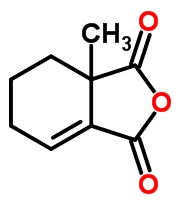
What is the density of MTHPA?
Leave a message

Hey there! As a supplier of MTHPA, I often get asked about the density of MTHPA. So, I thought I'd write this blog to share some insights on it.
First off, let's talk about what MTHPA is. MTHPA, or Methyltetrahydrophthalic Anhydride, is a key anhydride curing agent. You can find more details about it on this MTHPA page. It's widely used in various industries, especially in the field of epoxy resin curing.
Now, onto the density of MTHPA. The density of MTHPA is an important physical property. It typically has a density of around 1.17 g/cm³ at 25°C. This density value is crucial for a number of reasons. In the manufacturing process, it helps in determining the right amount of MTHPA to be used in a mixture. For example, when formulating epoxy resin systems, knowing the density allows for accurate calculations of the proportion of MTHPA to other components.
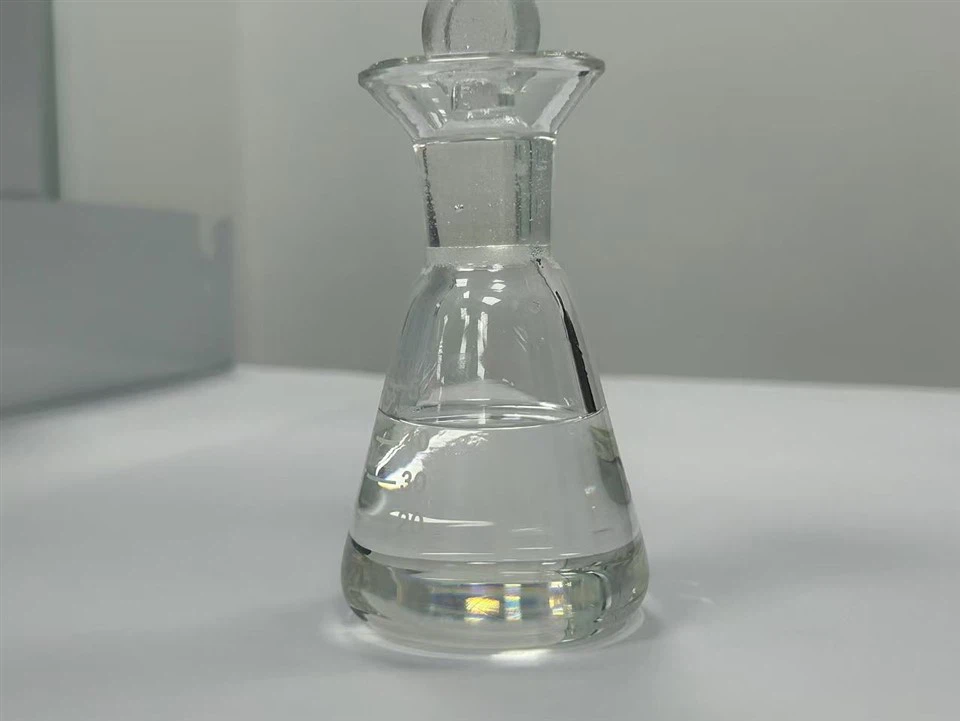

Comparing MTHPA with other similar anhydride curing agents can give us a better understanding. Take THPA (Tetrahydrophthalic Anhydride) for instance. THPA has a density of about 1.20 g/cm³ at 25°C. The slight difference in density between MTHPA and THPA can lead to different performance characteristics in the final products. For example, in terms of viscosity and reactivity, these two agents may behave differently due to their density variations.
Another related anhydride is 4-MHHPA (4-Methylhexahydrophthalic Anhydride). It has a density of approximately 1.16 g/cm³ at 25°C. This is quite close to MTHPA, but again, even a small difference can have an impact on the properties of the cured materials.
The density of MTHPA can also be affected by factors such as temperature and purity. As the temperature increases, the density of MTHPA will decrease slightly. This is because, like most substances, MTHPA expands when heated. And when it comes to purity, a higher purity MTHPA will have a more consistent density value. Impurities can cause variations in density, which may in turn affect the performance of the end product.
In practical applications, the density of MTHPA plays a vital role. In the electronics industry, for example, MTHPA is used in the encapsulation of electronic components. The right density ensures proper filling and protection of the components. In the coatings industry, the density affects the flow and leveling properties of the coating. If the density is not right, the coating may have issues such as uneven thickness or poor adhesion.
As a supplier, we take great care in ensuring the quality and consistency of our MTHPA. We conduct regular quality checks to make sure the density and other properties meet the industry standards. Our team of experts is always on hand to provide technical support and answer any questions you may have about MTHPA.
If you're in the market for MTHPA or have any inquiries about its density or other properties, don't hesitate to reach out. Whether you're a small business or a large corporation, we can offer you the best solutions for your needs. We're committed to providing high - quality MTHPA at competitive prices.
So, if you're interested in purchasing MTHPA or want to discuss further about its applications, just let us know. We're here to help you make the right choice for your projects.
References:
- General knowledge of anhydride curing agents in the chemical industry.
- Technical data sheets of MTHPA, THPA, and 4 - MHHPA.