

What is the surface finish of the cured product with anhydride curing agents?
Leave a message

Hey there! As a supplier of anhydride curing agents, I often get asked about the surface finish of cured products using these agents. So, I thought I'd dive into this topic and share some insights with you.
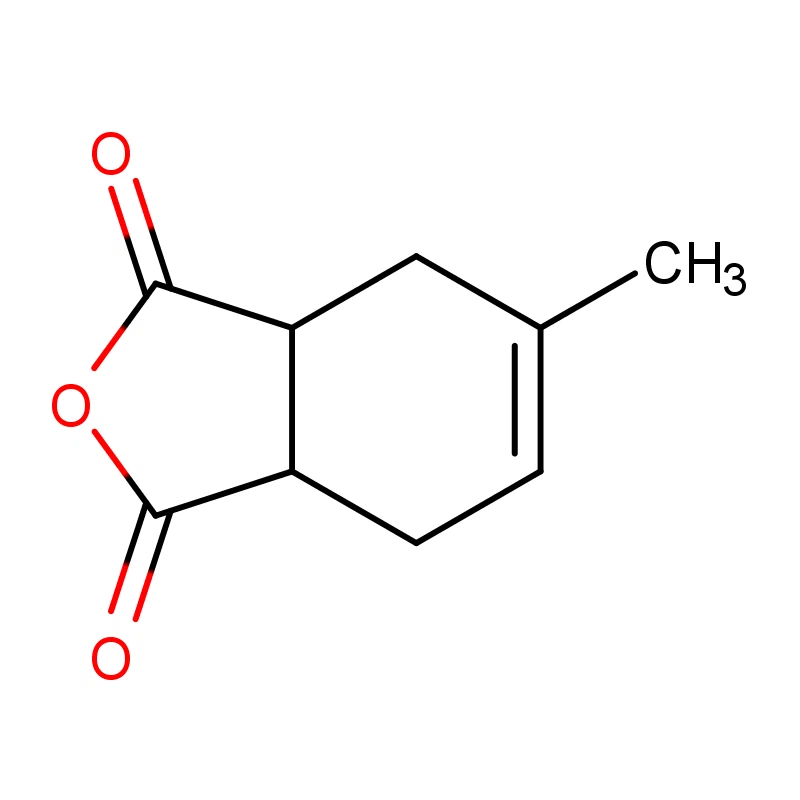

First off, let's understand what anhydride curing agents are. Anhydride curing agents are widely used in the epoxy resin industry. They react with epoxy resins to form a cross - linked polymer network, which gives the cured product its mechanical and chemical properties. There are different types of anhydride curing agents, like 4 - MHHPA, THPA, and 3 - MHHPA+4 - MHHPA. Each of these has its own unique characteristics that can affect the surface finish of the cured product.
Factors Affecting Surface Finish
1. Chemical Composition of the Anhydride Curing Agent
The chemical structure of the anhydride curing agent plays a huge role in determining the surface finish. For example, some anhydrides have a more linear structure, while others are more branched. Linear anhydrides tend to form a more uniform cross - linked network, which can result in a smoother surface finish. On the other hand, branched anhydrides may lead to a more complex cross - linking pattern, which could potentially cause a slightly rougher surface.
Let's take 4 - MHHPA as an example. It has a relatively compact and symmetric molecular structure. This allows it to react with epoxy resins in a more orderly manner, often resulting in a cured product with a glossy and smooth surface. In contrast, some other anhydrides with more irregular structures might not form such a perfect network, leading to a surface that is less shiny or has some minor imperfections.
2. Curing Conditions
The curing process is crucial for the surface finish. Temperature, time, and humidity all have an impact. If the curing temperature is too low, the reaction between the anhydride curing agent and the epoxy resin may be incomplete. This can lead to a sticky or tacky surface, which is definitely not what you want.
On the other hand, if the temperature is too high, it can cause the resin to cure too quickly. This rapid curing can result in internal stresses within the cured product, which may manifest as cracks or a rough surface. The ideal curing temperature and time depend on the specific anhydride curing agent and the epoxy resin being used. Usually, the manufacturer provides guidelines on the recommended curing conditions.
Humidity also matters. High humidity can introduce moisture into the curing process. Moisture can react with the anhydride curing agent or the epoxy resin, causing hydrolysis or other side reactions. These side reactions can lead to a cloudy or hazy surface finish.
3. Mixing Ratio
Getting the right mixing ratio of the anhydride curing agent and the epoxy resin is essential. If there is too much anhydride, the excess may not fully react with the resin, leaving behind unreacted material on the surface. This can cause a powdery or flaky surface finish. Conversely, if there is too little anhydride, the curing reaction may be incomplete, resulting in a soft and sticky surface.
Types of Surface Finishes
1. Glossy Finish
A glossy surface finish is often desired in applications where aesthetics are important, such as in decorative coatings or some consumer products. Anhydride curing agents like 4 - MHHPA can help achieve a high - gloss finish. The smooth and uniform cross - linked network formed during the curing process reflects light evenly, giving the surface a shiny appearance.
To get a glossy finish, it's important to control the curing conditions carefully. A slow and controlled curing process at the right temperature can help the resin flow and level out, resulting in a smooth and reflective surface.
2. Matte Finish
Matte finishes are popular in applications where glare needs to be reduced, such as in some industrial coatings or electronic device housings. To achieve a matte finish using anhydride curing agents, additives can be used. These additives can disrupt the smoothness of the surface at a microscopic level, scattering light and reducing the gloss.
Some anhydride curing agents can also be formulated to give a natural matte finish. For example, certain blends of 3 - MHHPA+4 - MHHPA can be adjusted to create a surface with a lower gloss level.
3. Textured Finish
Textured surface finishes are used in applications where grip or a unique appearance is required. This can be achieved by adding fillers or using special application techniques. For instance, adding fine particles like silica or alumina to the epoxy - anhydride mixture can create a textured surface. During the curing process, these particles protrude from the surface, giving it a rough or textured feel.
Applications and Surface Finish Requirements
1. Electrical Insulation
In electrical insulation applications, a smooth and defect - free surface finish is crucial. A rough or uneven surface can create areas of high electrical stress, which may lead to electrical breakdown. Anhydride - cured epoxy resins are often used in electrical insulation because they can provide good electrical properties and a smooth surface finish when cured properly.
2. Composite Materials
Composite materials, such as carbon fiber - reinforced polymers, use anhydride curing agents to bond the fibers together. The surface finish of the composite can affect its performance and appearance. A smooth surface finish can improve the aerodynamics of the composite part, which is important in aerospace applications. Additionally, a good surface finish can also enhance the adhesion of any coatings or paints applied to the composite.
3. Coatings
Coatings are used to protect and decorate various substrates. The surface finish requirements for coatings can vary widely. For automotive coatings, a high - gloss finish is often desired for a sleek and attractive appearance. In industrial coatings, a matte or textured finish may be more appropriate for hiding scratches and providing a non - slip surface.
How We Can Help
As a supplier of anhydride curing agents, we have a wide range of products to meet different surface finish requirements. Whether you need a high - gloss finish for a decorative application or a matte finish for an industrial coating, we can provide the right anhydride curing agent.
We also offer technical support to help you achieve the best surface finish. Our team of experts can assist you in selecting the appropriate curing agent, determining the correct mixing ratio, and optimizing the curing conditions. If you're facing any issues with the surface finish of your cured products, we're here to troubleshoot and find solutions.
If you're interested in learning more about our anhydride curing agents or have specific surface finish requirements for your project, don't hesitate to reach out. We're ready to have a detailed discussion and help you find the perfect solution for your needs. Contact us today to start the conversation!
References
- "Epoxy Resins: Chemistry and Technology" by Clayton A. May
- "Handbook of Epoxy Resins" by Henry Lee and Kris Neville


