

What are the effects of THPA on the viscosity of materials?
Leave a message

Tetrahydrophthalic anhydride (THPA) is a crucial chemical compound widely used in various industries, especially in the field of materials science. As a leading supplier of THPA, I am often asked about the effects of THPA on the viscosity of materials. In this blog post, I will delve into the details of how THPA influences the viscosity of different materials, exploring the underlying mechanisms and practical implications.
Understanding THPA
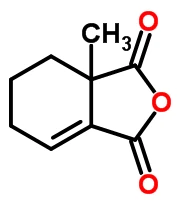
THPA is a cyclic anhydride with a molecular formula of C₈H₈O₃. It is a colorless to pale - yellow liquid or solid at room temperature, depending on its isomeric form. THPA is known for its high reactivity due to the presence of the anhydride group, which makes it an excellent curing agent for epoxy resins and other polymers. You can find more information about THPA on our website THPA.
Viscosity: A Key Material Property
Viscosity is a measure of a fluid's resistance to flow. In the context of materials, it plays a vital role in processing and performance. For example, in the manufacturing of composites, coatings, and adhesives, the viscosity of the resin system affects factors such as mixing, impregnation, and application. A low - viscosity material can flow easily, allowing for better wetting of fibers or substrates, while a high - viscosity material may provide better shape retention and mechanical properties.
Effects of THPA on the Viscosity of Epoxy Resins
Epoxy resins are one of the most common materials where THPA is used as a curing agent. When THPA is added to an epoxy resin, it reacts with the epoxy groups through a ring - opening reaction. This reaction leads to the formation of a cross - linked polymer network, which has a significant impact on the viscosity of the system.
Initial Viscosity Reduction
In the early stages of the reaction, the addition of THPA can cause a decrease in the viscosity of the epoxy resin. This is because THPA acts as a diluent, breaking up the intermolecular forces between the epoxy resin molecules. The low - molecular - weight THPA molecules can penetrate the resin matrix and reduce the entanglement of the resin chains, allowing for easier flow. This initial viscosity reduction is beneficial for processing, as it enables better mixing of the resin and other additives, and improves the impregnation of fibers in composite manufacturing.
Viscosity Increase during Curing
As the curing reaction progresses, the viscosity of the epoxy - THPA system starts to increase rapidly. The cross - linking reaction between THPA and the epoxy resin leads to the formation of a three - dimensional polymer network. As more and more bonds are formed, the mobility of the polymer chains is restricted, and the material becomes more viscous. Eventually, the system reaches a gel point, where it transitions from a liquid to a solid - like state. The rate of viscosity increase depends on several factors, including the temperature, the ratio of THPA to epoxy resin, and the presence of catalysts.

Influence of Temperature
Temperature plays a crucial role in the viscosity change of the epoxy - THPA system. At higher temperatures, the reaction rate between THPA and the epoxy resin is accelerated. This means that the viscosity increase occurs more rapidly, and the gel time is reduced. On the other hand, at lower temperatures, the reaction rate is slower, and the viscosity increase is more gradual. Manufacturers can control the processing window by adjusting the temperature, allowing for more flexibility in the production process.
Comparison with Other Anhydride Curing Agents
In addition to THPA, other anhydride curing agents such as methyltetrahydrophthalic anhydride (MTHPA) and 4 - methylhexahydrophthalic anhydride (4 - MHHPA) are also commonly used in epoxy resin systems. You can learn more about these curing agents on our website: MTHPA and 4 - MHHPA.
Viscosity Profiles
The viscosity profiles of epoxy resin systems cured with different anhydrides can vary. MTHPA, for example, generally has a lower viscosity than THPA, which can result in a more significant initial viscosity reduction in the epoxy resin. 4 - MHHPA, on the other hand, may offer a more balanced viscosity change during curing, with a relatively slower increase in viscosity compared to THPA. These differences in viscosity behavior can be exploited in different applications. For instance, in applications where a long pot life and low - viscosity processing are required, MTHPA may be a better choice, while THPA may be preferred for applications where a faster curing rate and higher final viscosity are desired.
Effects of THPA on the Viscosity of Other Polymers
THPA can also be used in other polymer systems, such as polyester resins and polyurethanes. In polyester resins, THPA can react with the hydroxyl groups of the polyester, leading to changes in the viscosity similar to those observed in epoxy resins. The initial addition of THPA may reduce the viscosity, followed by an increase as the cross - linking reaction proceeds.
In polyurethanes, THPA can be used as a chain extender or a cross - linker. Its reaction with the isocyanate groups can alter the molecular structure of the polyurethane, affecting its viscosity. The specific effects depend on the chemical composition of the polyurethane system and the reaction conditions.
Practical Implications in Industrial Applications
The effects of THPA on the viscosity of materials have several practical implications in industrial applications.
Composite Manufacturing
In composite manufacturing, the viscosity control of the epoxy - THPA system is crucial for achieving high - quality composites. The initial viscosity reduction allows for better impregnation of fibers, ensuring good wetting and adhesion. The subsequent viscosity increase during curing helps to maintain the shape of the composite and provides the desired mechanical properties. By carefully controlling the amount of THPA and the curing conditions, manufacturers can optimize the processing and performance of the composites.
Coatings and Adhesives
In coatings and adhesives, the viscosity of the resin system affects the application process and the final properties of the coating or adhesive. A low - viscosity epoxy - THPA system can be easily applied by spraying or brushing, while a high - viscosity system may be more suitable for applications where a thick film or strong bond is required. The ability to control the viscosity through the use of THPA allows for the customization of coatings and adhesives for different substrates and end - uses.
Conclusion
As a supplier of THPA, I understand the importance of the effects of THPA on the viscosity of materials. The addition of THPA to epoxy resins and other polymers can have a significant impact on the viscosity, both in the initial stages of processing and during curing. By understanding these effects and the underlying mechanisms, manufacturers can optimize the processing conditions and achieve the desired properties in their products.
If you are interested in learning more about THPA and its applications, or if you are looking to purchase high - quality THPA for your business, please feel free to contact us for a procurement discussion. We are committed to providing you with the best products and technical support to meet your specific needs.
References
- Lee, H., & Neville, K. (1967). Handbook of Epoxy Resins. McGraw - Hill.
- May, C. A. (Ed.). (1988). Epoxy Resins: Chemistry and Technology. Marcel Dekker.
- Pascault, J. P., & Williams, R. J. J. (2010). Epoxy Polymers: New Materials and Innovations. Wiley - VCH.


