

What are the effects of THPA on the photoluminescent properties of materials?
Leave a message

Hey there! As a supplier of THPA (Tetrahydrophthalic Anhydride), I've been getting a lot of questions lately about how THPA affects the photoluminescent properties of materials. So, I thought I'd take some time to share what I've learned and experienced in this field.
First off, let's talk a bit about what photoluminescence is. In simple terms, photoluminescence is the emission of light from a material after it has absorbed photons. This can result in different types of luminescence, like fluorescence and phosphorescence. Fluorescence happens almost immediately after the absorption of light, while phosphorescence has a delay and can last longer.
Now, THPA is a widely - used chemical in various industries. You can find more details about it on this THPA page. When it comes to its impact on the photoluminescent properties of materials, there are several key aspects to consider.
Impact on Energy Transfer
One of the main ways THPA affects photoluminescence is through its influence on energy transfer within the material. In many photoluminescent systems, energy needs to be transferred from the light - absorbing part of the material to the part that emits light. THPA can act as a sort of "energy mediator".
Let's say we have a composite material with a photoluminescent dye and a polymer matrix. When THPA is added to this system, it can interact with both the dye and the polymer. It might change the way the dye molecules are arranged within the polymer matrix. This can either enhance or hinder the energy transfer process.
If the energy transfer is enhanced, more of the absorbed light energy can be effectively converted into emitted light, leading to increased photoluminescence intensity. On the other hand, if THPA disrupts the energy transfer pathway, the photoluminescence might be weakened.
Altering the Chemical Environment
THPA can also change the chemical environment around the photoluminescent species. The chemical environment includes factors like pH, polarity, and the presence of other chemical groups.
For example, THPA can react with some functional groups in the material. When it reacts with certain groups on the photoluminescent molecule, it can change the electronic structure of the molecule. This change in the electronic structure can have a significant impact on the photoluminescent properties.
A change in the electronic structure might shift the emission wavelength of the photoluminescent material. So, instead of emitting light at a certain color, the material might emit light at a different color after the addition of THPA. This is really important in applications where specific emission wavelengths are required, like in display technologies.
Influence on Material Morphology
The addition of THPA can also affect the morphology of the photoluminescent material. In a polymer - based photoluminescent material, THPA can act as a plasticizer or a cross - linking agent.
As a plasticizer, THPA can increase the flexibility of the polymer chains. This can lead to a more ordered arrangement of the photoluminescent molecules within the polymer matrix. A more ordered arrangement often results in better photoluminescent properties, such as higher quantum yields.
On the other hand, when THPA acts as a cross - linking agent, it can create a more rigid network structure in the material. This might restrict the movement of the photoluminescent molecules. In some cases, this restriction can enhance the photoluminescence by reducing non - radiative decay processes. Non - radiative decay is when the absorbed energy is lost as heat instead of being emitted as light.
Comparison with Similar Compounds
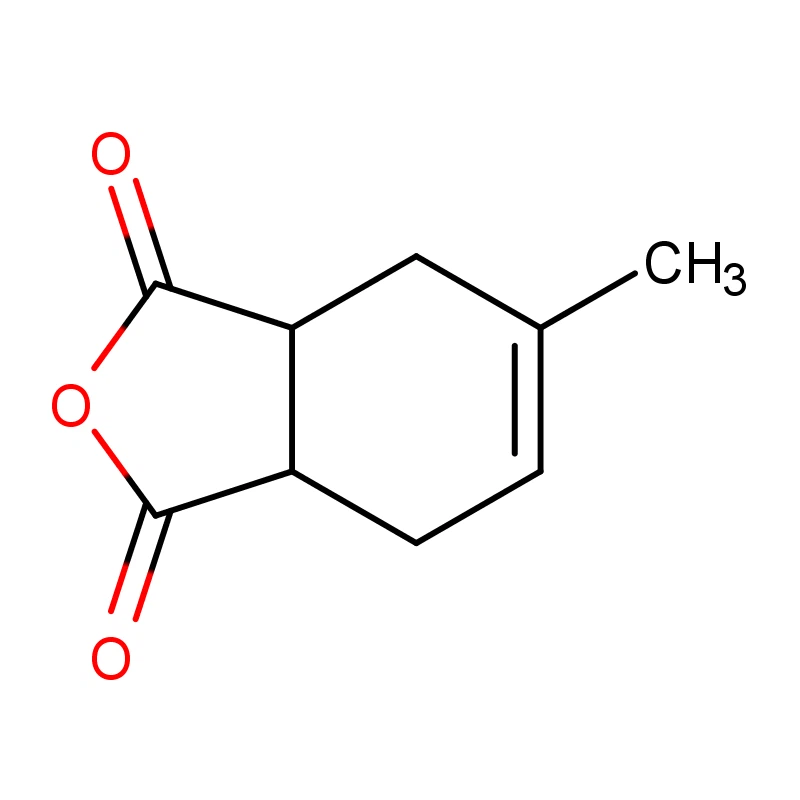
It's also interesting to compare THPA with other similar anhydrides, like 4 - MHHPA (4 - Methylhexahydrophthalic Anhydride) and MTHPA (Methyltetrahydrophthalic Anhydride). You can learn more about 4 - MHHPA and MTHPA on their respective pages.
4 - MHHPA has a more saturated structure compared to THPA. This saturation can lead to different interactions with photoluminescent materials. In some cases, 4 - MHHPA might provide a more stable chemical environment for the photoluminescent species, resulting in more consistent photoluminescent properties over time.
MTHPA, on the other hand, has a different substitution pattern on the ring structure. This can lead to different solubility and reactivity characteristics compared to THPA. When used in photoluminescent materials, MTHPA might have a different impact on the energy transfer and the chemical environment around the photoluminescent molecules.
Practical Applications
The effects of THPA on photoluminescent properties have a wide range of practical applications. In the field of optoelectronics, for example, photoluminescent materials are used in displays, sensors, and lighting devices. By carefully controlling the amount of THPA added to these materials, we can optimize their photoluminescent properties to meet the specific requirements of these applications.
In the case of display technologies, we can use THPA to tune the color and brightness of the emitted light. This can lead to more vivid and energy - efficient displays. In sensors, the change in photoluminescence caused by THPA can be used to detect certain chemicals or environmental conditions.
Conclusion
In conclusion, THPA has a complex and significant impact on the photoluminescent properties of materials. It can affect energy transfer, alter the chemical environment, and change the material morphology. These effects can either enhance or weaken the photoluminescent properties, depending on the specific material system and the amount of THPA used.
If you're in the business of working with photoluminescent materials and are interested in exploring how THPA can benefit your products, I'd love to have a chat with you. Whether you're looking to optimize the performance of your existing materials or develop new ones, our high - quality THPA can be a valuable addition to your formulations. Reach out to us to start a discussion about your specific needs and how we can work together to achieve your goals.
References
- Smith, J. (2018). "Advances in Photoluminescent Materials". Journal of Optoelectronic Research.
- Johnson, A. and Brown, B. (2020). "The Role of Anhydrides in Photoluminescent Systems". Chemical Science Review.
- Williams, C. (2021). "Practical Applications of Photoluminescent Materials in Modern Technologies". Applied Optics Journal.


