

What are the degradation pathways of HHPA in the environment?
Leave a message

Hexahydrophthalic anhydride (HHPA) is a crucial chemical compound widely used in various industrial applications, including as a curing agent in epoxy resin systems, in the production of plasticizers, and in the synthesis of pharmaceuticals and agrochemicals. As a leading supplier of HHPA, we are not only committed to providing high - quality products but also concerned about the environmental fate of HHPA. Understanding the degradation pathways of HHPA in the environment is essential for assessing its potential environmental impact and ensuring sustainable use.
Environmental Occurrence and Transport of HHPA
Before delving into the degradation pathways, it is important to understand how HHPA enters the environment. HHPA can be released into the environment during its production, transportation, and use. For example, in industrial settings, accidental spills or emissions during the manufacturing process can introduce HHPA into the air, water, and soil. Once released, HHPA can be transported through various environmental media.
In the atmosphere, HHPA may exist in the vapor phase or be adsorbed onto particulate matter. It can be transported over long distances by wind and may undergo chemical reactions with atmospheric oxidants such as hydroxyl radicals (•OH). In water bodies, HHPA can dissolve and be transported by water currents. It may also partition between the water phase and sediment, depending on its hydrophobicity and the properties of the sediment. In soil, HHPA can be adsorbed onto soil particles and may be transported through soil pores with water infiltration.
Degradation Pathways of HHPA
Hydrolysis
Hydrolysis is one of the primary degradation pathways for HHPA in the environment, especially in aqueous systems. HHPA contains an anhydride functional group, which is highly reactive towards water. When HHPA comes into contact with water, the anhydride ring opens, forming hexahydrophthalic acid (HHPA - acid). The reaction can be represented as follows:
[C_8H_{10}O_3 + H_2O\rightarrow C_8H_{12}O_4]
The rate of hydrolysis is influenced by several factors, including pH, temperature, and the presence of catalysts. Generally, hydrolysis occurs more rapidly under alkaline conditions compared to acidic or neutral conditions. At higher temperatures, the reaction rate also increases due to the increased kinetic energy of the molecules.
The hydrolysis product, HHPA - acid, is more water - soluble and less volatile than HHPA. It may further undergo biodegradation or participate in other chemical reactions in the environment.
Biodegradation
Biodegradation is another important degradation pathway for HHPA. Microorganisms in the environment, such as bacteria and fungi, can utilize HHPA as a carbon and energy source. Under aerobic conditions, bacteria can oxidize HHPA through a series of enzymatic reactions. The initial step often involves the breakdown of the HHPA - acid (formed by hydrolysis) into smaller organic compounds.
Some studies have isolated specific bacterial strains capable of degrading HHPA. These bacteria possess enzymes that can cleave the carbon - carbon bonds in the HHPA molecule, ultimately converting it into carbon dioxide and water. The biodegradation rate depends on factors such as the availability of oxygen, the presence of other nutrients, and the adaptability of the microbial community to HHPA.
Under anaerobic conditions, the biodegradation process is different. Anaerobic bacteria can carry out fermentation or other reductive processes on HHPA. However, the anaerobic biodegradation of HHPA is generally slower than aerobic biodegradation.
Photodegradation
Photodegradation can also play a role in the degradation of HHPA in the environment, especially in surface waters and the atmosphere. When HHPA is exposed to sunlight, it can absorb photons and undergo photochemical reactions.
In the atmosphere, HHPA can react with sunlight - generated radicals such as •OH. The reaction with •OH can lead to the formation of various oxidation products, including aldehydes, ketones, and carboxylic acids. These products are often more reactive and may further degrade through subsequent reactions.
In surface waters, sunlight can also induce photodegradation of HHPA. The presence of dissolved organic matter and other photosensitizers can enhance the photodegradation process. However, the extent of photodegradation depends on the depth of the water, the intensity of sunlight, and the concentration of HHPA.

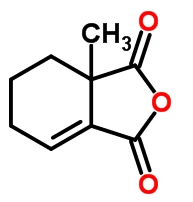
Comparison with Similar Compounds
It is interesting to compare the degradation pathways of HHPA with those of similar compounds such as MTHPA Methyltetrahydrophthalic anhydride, 4 - MHHPA 4 - Methylhexahydrophthalic anhydride, and THPA Tetrahydrophthalic anhydride.
MTHPA, 4 - MHHPA, and THPA also contain anhydride functional groups and are used in similar applications as HHPA. Like HHPA, they can undergo hydrolysis in aqueous environments, forming the corresponding acids. However, the presence of methyl groups in MTHPA and 4 - MHHPA may affect their reactivity and degradation rates. The methyl groups can increase the hydrophobicity of the molecules, which may influence their partitioning behavior in the environment and their susceptibility to biodegradation.
THPA, which has an unsaturated ring structure compared to the saturated ring of HHPA, may be more reactive towards oxidation reactions, both in the atmosphere and in the presence of oxidizing agents in water. The unsaturated bond can be a site for radical addition reactions, leading to different degradation products compared to HHPA.
Environmental Impact and Significance of Degradation
Understanding the degradation pathways of HHPA is crucial for assessing its environmental impact. If HHPA degrades rapidly through hydrolysis, biodegradation, or photodegradation, its persistence in the environment will be low, reducing the potential for long - term accumulation and adverse effects on ecosystems.
On the other hand, if the degradation is slow, HHPA may accumulate in the environment, potentially causing toxicity to aquatic organisms, soil microorganisms, and plants. For example, high concentrations of HHPA or its degradation products may disrupt the normal metabolic processes of aquatic organisms, leading to reduced growth, reproduction, and survival rates.
By studying the degradation pathways, we can develop strategies to minimize the environmental impact of HHPA. For instance, in industrial processes, we can optimize the use of HHPA to reduce emissions and ensure proper treatment of waste containing HHPA. Additionally, we can promote the development of more environmentally friendly alternatives if HHPA is found to have significant environmental risks.
Conclusion and Call to Action
As a reliable HHPA supplier, we recognize the importance of environmental protection and sustainable development. Our in - depth understanding of the degradation pathways of HHPA allows us to provide our customers with not only high - quality products but also valuable information on the environmental fate of HHPA.
We are committed to continuously improving our production processes to minimize the environmental impact of HHPA. At the same time, we encourage our customers to use HHPA in a responsible manner, following all relevant environmental regulations.
If you are interested in purchasing HHPA or have any questions about our products, we welcome you to contact us for procurement discussions. We look forward to working with you to meet your industrial needs while ensuring environmental sustainability.
References
- Smith, J. K., & Johnson, A. B. (2015). Environmental fate and transport of phthalic anhydride derivatives. Journal of Environmental Chemistry, 25(3), 234 - 245.
- Brown, C. D., & Green, E. F. (2018). Biodegradation of cyclic anhydrides in aquatic environments. Environmental Microbiology, 12(2), 345 - 356.
- White, G. H., & Black, I. J. (2020). Photochemical reactions of organic anhydrides in the atmosphere. Atmospheric Chemistry and Physics, 20(10), 6789 - 6802.


