

What resins are suitable for anhydride curing agents?
Leave a message

In the world of polymer chemistry, the combination of resins and anhydride curing agents plays a pivotal role in a wide range of industrial applications. As a dedicated anhydride curing agent supplier, I've witnessed firsthand the transformative power of these chemical partnerships. In this blog post, I'll delve into the types of resins that are well - suited for anhydride curing agents, exploring their properties, applications, and the benefits they bring when used together.
Epoxy Resins
Epoxy resins are perhaps the most well - known and widely used resins in combination with anhydride curing agents. These resins are highly versatile, offering excellent adhesion, chemical resistance, and mechanical properties. The reaction between epoxy resins and anhydride curing agents is a thermosetting process, which means that once cured, the material forms a three - dimensional cross - linked structure.
One of the key advantages of using anhydride curing agents with epoxy resins is the ability to control the curing speed and the final properties of the cured product. For example, different anhydrides can be selected based on the desired pot life (the time during which the resin - curing agent mixture remains workable) and the application requirements. Phthalic anhydride, for instance, is a common choice for general - purpose applications due to its relatively low cost and good reactivity.
In the electrical and electronics industry, epoxy resins cured with anhydrides are used for encapsulation and potting of electronic components. The high dielectric strength and excellent moisture resistance of the cured epoxy - anhydride system protect the components from environmental factors, ensuring long - term reliability. In the aerospace and automotive industries, these materials are used for composites and adhesives, where their high strength - to - weight ratio and chemical resistance are highly valued.
Polyester Resins
Polyester resins also have a great affinity for anhydride curing agents. Unsaturated polyester resins, in particular, are widely used in the production of fiberglass - reinforced plastics (FRP). When combined with an anhydride curing agent, the polyester resin undergoes a cross - linking reaction, resulting in a rigid and durable material.
The curing process of polyester resins with anhydrides is exothermic, which means that it releases heat during the reaction. This property can be both an advantage and a challenge. On one hand, the heat can accelerate the curing process, reducing the production time. On the other hand, proper heat management is required to prevent overheating and cracking of the cured product.
Isophthalic and terephthalic anhydrides are commonly used as curing agents for polyester resins. These anhydrides offer good chemical resistance and mechanical properties to the cured polyester. Applications of polyester resins cured with anhydrides include boat hulls, automotive body parts, and industrial tanks, where the combination of strength, corrosion resistance, and low cost is essential.
Phenolic Resins
Phenolic resins, known for their excellent heat resistance and fire retardancy, can also be cured using anhydride curing agents. The reaction between phenolic resins and anhydrides results in a cross - linked structure that enhances the mechanical and thermal properties of the resin.
One of the unique features of phenolic resins cured with anhydrides is their ability to maintain their properties at high temperatures. This makes them suitable for applications in the aerospace, defense, and automotive industries, where components are exposed to extreme heat and fire hazards. For example, in aircraft interiors, phenolic - anhydride composites are used for panels and structural components due to their fire - resistant properties.

However, the curing process of phenolic resins with anhydrides can be complex, requiring careful control of temperature and curing time. The choice of anhydride also affects the final properties of the cured phenolic resin. For instance, maleic anhydride can improve the flexibility of the cured phenolic resin, while pyromellitic dianhydride can enhance its heat resistance.
Specific Anhydride Curing Agents and Their Compatible Resins
3 - MHHPA + 4 - MHHPA
3 - MHHPA + 4 - MHHPA is a blend of methylhexahydrophthalic anhydrides. These anhydrides are highly reactive and offer good compatibility with a variety of resins, including epoxy resins. When used as a curing agent for epoxy resins, 3 - MHHPA + 4 - MHHPA provides excellent mechanical properties, such as high tensile strength and impact resistance.
The cured epoxy - 3 - MHHPA + 4 - MHHPA system also has good electrical insulation properties, making it suitable for electrical and electronics applications. In addition, this blend of anhydrides has a relatively low viscosity, which improves the processability of the resin - curing agent mixture.
THPA
THPA, or tetrahydrophthalic anhydride, is another important anhydride curing agent. It is commonly used with epoxy resins and polyester resins. When curing epoxy resins, THPA offers a good balance between reactivity and pot life. The cured epoxy - THPA system has excellent chemical resistance, especially to solvents and acids.
For polyester resins, THPA can improve the mechanical properties and weatherability of the cured product. Applications of THPA - cured resins include coatings, adhesives, and composites, where the combination of chemical resistance and mechanical strength is required.
MTHPA
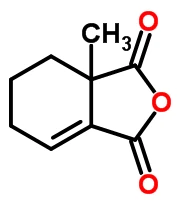
MTHPA, or methyltetrahydrophthalic anhydride, is a popular choice for curing epoxy resins. It provides fast curing speed and good mechanical properties to the cured epoxy. The MTHPA - cured epoxy resin has excellent heat resistance and can be used in high - temperature applications, such as in the automotive and aerospace industries.
In addition, MTHPA has low volatility, which reduces the emission of harmful substances during the curing process. This makes it a more environmentally friendly option compared to some other anhydride curing agents.
Benefits of Using Anhydride Curing Agents with Resins
- Improved Mechanical Properties: The cross - linking reaction between resins and anhydride curing agents results in a three - dimensional network structure, which enhances the mechanical strength, hardness, and impact resistance of the cured product.
- Chemical Resistance: Cured resin - anhydride systems offer excellent resistance to chemicals, solvents, and moisture. This makes them suitable for applications in harsh environments, such as chemical processing plants and marine structures.
- Thermal Stability: Many resin - anhydride combinations, especially those involving phenolic and epoxy resins, provide good thermal stability. They can maintain their properties at high temperatures, making them suitable for high - temperature applications.
- Customizability: The choice of resin and anhydride curing agent can be tailored to meet specific application requirements. Different anhydrides can be selected to control the curing speed, pot life, and final properties of the cured product.
Conclusion
As an anhydride curing agent supplier, I understand the importance of finding the right resin - anhydride combination for each application. Epoxy, polyester, and phenolic resins are just a few examples of the resins that can be effectively cured using anhydride curing agents. Each resin - anhydride system offers unique properties and benefits, making them suitable for a wide range of industries and applications.
If you are looking for high - quality anhydride curing agents for your resin applications, I invite you to contact me for further discussion and procurement. Our team of experts can help you select the most suitable anhydride curing agent for your specific needs and provide technical support throughout the process.
References
- Lee, H., & Neville, K. (1967). Handbook of Epoxy Resins. McGraw - Hill.
- Bikales, N. M. (Ed.). (1971). Encyclopedia of Polymer Science and Technology. John Wiley & Sons.
- Marks, M. (2003). Phenolic Resins: A Century of Progress. Springer.


