

What is the optical clarity of the cured product with anhydride curing agents?
Leave a message

What is the optical clarity of the cured product with anhydride curing agents?
As a supplier of anhydride curing agents, I've witnessed firsthand the remarkable influence of these substances on the properties of cured products, especially when it comes to optical clarity. Optical clarity refers to the degree to which a material allows light to pass through with minimal scattering or absorption, resulting in a clear, transparent appearance. This characteristic is highly valued in various industries, such as electronics, optics, and coatings, where the aesthetic and functional performance of the end - product depends on its transparency.
Anhydride Curing Agents: An Overview
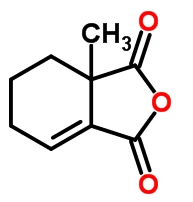
Anhydride curing agents are widely used in epoxy resin systems due to their excellent thermal and chemical resistance, as well as their ability to provide long pot - lives. When reacted with epoxy resins, they form a three - dimensional cross - linked network, which can significantly enhance the mechanical and physical properties of the cured material. Common types of anhydride curing agents include 3 - MHHPA+4 - MHHPA, MTHPA, and 4 - MHHPA. Each of these agents has unique chemical structures and reactivity profiles that can affect the optical clarity of the cured product.
Factors Affecting Optical Clarity
-
Purity of the Curing Agent: The purity of the anhydride curing agent is crucial for achieving high optical clarity. Impurities in the curing agent can act as scattering centers for light, causing the cured product to appear hazy or opaque. During the manufacturing process, contaminants such as dust, metal ions, or unreacted compounds can be introduced. These impurities may not participate in the curing reaction, but they can disrupt the uniformity of the cross - linked network, leading to scattering of light. For instance, metal ion impurities can absorb and scatter light, reducing the overall transparency of the cured product. Therefore, we ensure that our anhydride curing agents are of the highest purity through rigorous purification processes.
-
Curing Conditions: The curing conditions, including temperature, time, and the presence of catalysts, can have a significant impact on the optical clarity of the cured product. If the curing temperature is too high or too low, it can lead to incomplete curing or the formation of uneven cross - linking structures. Incomplete curing can result in a sticky or partially cured layer, which scatters light and reduces clarity. On the other hand, excessive curing temperatures can cause thermal degradation of the polymer network, leading to yellowing or the formation of bubbles, both of which negatively affect optical clarity. The curing time also needs to be carefully controlled. A short curing time may not allow the epoxy and anhydride to fully react, while an overly long curing time can cause unnecessary stress and structural changes in the cured material.
-
Ratio of Epoxy to Anhydride: The stoichiometric ratio of epoxy resin to anhydride curing agent is another important factor. An improper ratio can lead to either unreacted epoxy or anhydride in the cured product. Unreacted components can phase - separate or form clusters within the polymer matrix, which act as light - scattering centers. For example, if there is an excess of anhydride, it may not fully react with the epoxy, resulting in pockets of unreacted anhydride that cause haze in the cured material. Optimal ratios are typically determined through careful experimentation to ensure a uniform and well - cross - linked structure that maximizes optical clarity.
-
Chemical Structure of the Anhydride: The chemical structure of the anhydride curing agent itself can influence optical clarity. Some anhydrides have more rigid or symmetrical structures, which can lead to a more ordered cross - linked network. A more ordered network generally allows light to pass through more easily, resulting in better optical clarity. For example, anhydrides with fewer irregular side chains or bulky substituents are more likely to form a homogenous and transparent cured product compared to those with complex or large - scale chemical structures.
Measurement of Optical Clarity
The optical clarity of cured products can be measured using several techniques. One common method is the use of a haze meter, which quantifies the amount of light that is scattered when passing through the material. Haze is defined as the percentage of transmitted light that deviates from the incident light by more than a specified angle. Lower haze values indicate higher optical clarity. Another method is the measurement of the transmittance of the material, usually at specific wavelengths of light. High transmittance values suggest that most of the light is passing through the material without significant absorption or scattering.
Applications and Requirements for Optical Clarity
- Optical Devices: In the manufacturing of optical lenses, prisms, and waveguides, high optical clarity is essential for achieving good light transmission and focusing properties. Our anhydride curing agents can be used to encapsulate optical components, ensuring long - term stability and protection while maintaining excellent transparency. The cured products must have very low haze values and high transmittance across a wide range of wavelengths to meet the strict requirements of these applications.
- Display Screens: Liquid crystal displays (LCDs) and organic light - emitting diode (OLED) displays require clear and transparent encapsulating materials to protect the delicate electronic components and provide a clear view of the display. Anhydride - cured epoxy resins can be used as encapsulants, providing a barrier against moisture, oxygen, and other contaminants while maintaining optical clarity. The cured materials need to be highly transparent and have good adhesion to the display substrates.
- Decorative Coatings: In the furniture and automotive industries, decorative coatings with high optical clarity are used to enhance the appearance of products. Our anhydride curing agents can be formulated into epoxy coatings that provide a glossy, clear finish. These coatings not only protect the underlying surface from scratches and chemical damage but also give the product a high - end, aesthetically pleasing look.
Our Advantage as a Supplier
As a leading supplier of anhydride curing agents, we are committed to providing products that meet the highest standards of optical clarity. Our state - of - the - art manufacturing facilities and strict quality control measures ensure that each batch of our curing agents is of consistent high quality. We work closely with our customers to understand their specific requirements and provide customized solutions. Whether it's a new application with unique optical clarity needs or an existing process that requires improvement in transparency, our technical support team is always ready to offer expert advice.
Contact Us for Procurement
If you are in the market for high - quality anhydride curing agents with excellent optical clarity, we invite you to contact us for procurement. Our team is eager to discuss your needs and provide you with samples and detailed product information. We believe that our products can help you achieve the best results in your applications, whether it's in the optical, electronics, or coatings industries. Contact us today to start a beneficial business relationship.
References
[1] A. R. West, "Solid State Chemistry and its Applications", John Wiley & Sons, 2013.
[2] C. A. May, "Epoxy Resins: Chemistry and Technology", Marcel Dekker, 1988.
[3] R. J. Young, P. A. Lovell, "Introduction to Polymers", Chapman & Hall, 1991.


