

What is the molecular weight of MTHPA?
Leave a message

The molecular weight of a chemical compound is a fundamental property that plays a crucial role in various chemical and industrial applications. In the context of MTHPA (Methyltetrahydrophthalic Anhydride), understanding its molecular weight is essential for formulators, chemists, and manufacturers working with this versatile anhydride curing agent. As a supplier of MTHPA, I am well - versed in the properties and applications of this compound, and I'm excited to share detailed insights about its molecular weight and related aspects.
Understanding Molecular Weight
Before delving into the specific molecular weight of MTHPA, it's important to understand what molecular weight means. Molecular weight, also known as molar mass, is the mass of one mole of a chemical compound. It is expressed in grams per mole (g/mol). The molecular weight is calculated by summing up the atomic weights of all the atoms in a molecule. Each element has a specific atomic weight, which can be found on the periodic table. For example, the atomic weight of carbon (C) is approximately 12.01 g/mol, hydrogen (H) is about 1.008 g/mol, and oxygen (O) is around 16.00 g/mol.
Molecular Structure of MTHPA
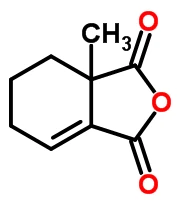
MTHPA has a complex molecular structure. Its chemical formula is C₉H₁₀O₃. To calculate its molecular weight, we need to consider the number of each type of atom in the molecule and multiply it by the atomic weight of that element.
In MTHPA, there are 9 carbon atoms, 10 hydrogen atoms, and 3 oxygen atoms.
- The total mass contributed by carbon atoms is (9\times12.01 = 108.09) g/mol.
- The total mass contributed by hydrogen atoms is (10\times1.008 = 10.08) g/mol.
- The total mass contributed by oxygen atoms is (3\times16.00 = 48.00) g/mol.
By adding these values together, we can calculate the molecular weight of MTHPA: (108.09+10.08 + 48.00=166.17) g/mol.
Significance of MTHPA's Molecular Weight
The molecular weight of MTHPA has far - reaching implications in its applications. In the field of epoxy resin curing, for instance, the molecular weight affects the reactivity, viscosity, and mechanical properties of the cured resin. A lower molecular weight compound like MTHPA typically has a higher reactivity, which means it can cure epoxy resins more quickly. This is because smaller molecules can more easily diffuse through the epoxy matrix and react with the epoxy groups.
The viscosity of the curing system is also influenced by the molecular weight. MTHPA, with its relatively low molecular weight, results in a lower - viscosity mixture when combined with epoxy resins. This low - viscosity characteristic is beneficial as it allows for better wetting of the reinforcement materials (such as glass fibers in composites) and easier processing, including casting and molding operations.
In terms of the mechanical properties of the cured resin, the molecular weight of MTHPA plays a role in determining the cross - linking density. A proper cross - linking density is crucial for achieving desirable mechanical properties such as strength, hardness, and toughness. The molecular weight of MTHPA helps in achieving an optimal cross - linking density, which in turn enhances the performance of the final product in various applications, including electrical insulation, coatings, and adhesives.
Comparison with Related Anhydrides
When comparing MTHPA with other anhydride curing agents such as HHPA (Hexahydrophthalic Anhydride) and 3 - MHHPA+4 - MHHPA (Mixture of 3 - Methylhexahydrophthalic Anhydride and 4 - Methylhexahydrophthalic Anhydride), their molecular weights are different, which leads to distinct properties and applications.
HHPA has a chemical formula of C₈H₁₀O₃. Calculating its molecular weight:
- For carbon: (8\times12.01 = 96.08) g/mol.
- For hydrogen: (10\times1.008 = 10.08) g/mol.
- For oxygen: (3\times16.00 = 48.00) g/mol.
The molecular weight of HHPA is (96.08+10.08 + 48.00 = 154.16) g/mol.
The 3 - MHHPA+4 - MHHPA mixture has a similar structure to MTHPA but with different substitution patterns. Their molecular weights are also in a similar range, but the differences can lead to variations in properties such as curing speed, flexibility, and chemical resistance.
Quality Control and Molecular Weight
As a supplier of MTHPA, we pay close attention to the molecular weight of our product. Quality control is of utmost importance to ensure that the MTHPA we supply meets the strict requirements of our customers. We use advanced analytical techniques such as gel permeation chromatography (GPC) to accurately measure the molecular weight and its distribution.
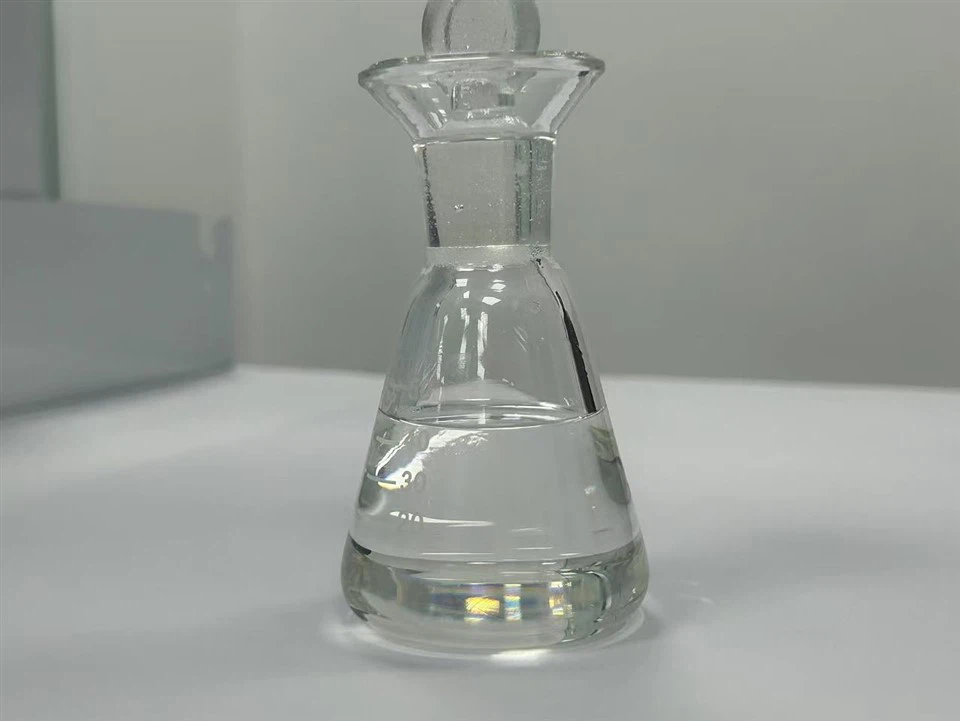
A consistent molecular weight is crucial for the reproducibility of the curing process and the performance of the final products. Any significant deviation in the molecular weight can lead to variations in the curing time, mechanical properties, and other important characteristics of the cured epoxy resin. Therefore, we have a rigorous quality control system in place to ensure that the molecular weight of our MTHPA is within the specified range.
Applications of MTHPA Based on Molecular Weight
The molecular weight of MTHPA makes it suitable for a wide range of applications. In the electrical and electronics industry, MTHPA - cured epoxy resins are used for encapsulation and potting of electronic components. The low - viscosity and high - reactivity characteristics associated with its molecular weight allow for easy filling of complex shapes and fast curing, which is essential for high - volume production.
In the composite materials industry, MTHPA is used to cure epoxy resins in the production of fiber - reinforced composites. The ability to achieve a proper cross - linking density due to its molecular weight results in composites with excellent mechanical properties, such as high strength - to - weight ratio and good fatigue resistance.
Conclusion and Call to Action
In conclusion, the molecular weight of MTHPA, which is approximately 166.17 g/mol, is a key property that influences its reactivity, viscosity, and the mechanical properties of the cured epoxy resins. Understanding this property is essential for anyone involved in the formulation and application of MTHPA - based products.
As a reliable supplier of MTHPA, we are committed to providing high - quality MTHPA with consistent molecular weight and excellent performance. If you are in the market for MTHPA for your epoxy resin curing needs, we invite you to contact us for further discussions and to explore how our product can meet your specific requirements. Whether you are working on electrical insulation, composites, or other applications, our MTHPA can be a valuable addition to your formulations.
References
- Handbook of Epoxy Resins, Lee and Neville.
- Polymer Science and Technology textbooks.
- Technical literature on anhydride curing agents from industry sources.


