

What is the chemical composition of anhydride curing agents?
Leave a message

Anhydride curing agents play a crucial role in various industries, especially in the field of polymer materials. As an anhydride curing agent supplier, I am often asked about the chemical composition of these agents. In this blog post, I will delve into the details of the chemical composition of anhydride curing agents, shedding light on their structures, types, and applications.
General Concept of Anhydride Curing Agents
Anhydride curing agents are chemical compounds that contain an anhydride functional group (-C(=O)-O-C(=O)-). This functional group is highly reactive and can react with other substances, particularly with epoxy groups in epoxy resins, to initiate a curing process. During the curing process, the anhydride group opens up and reacts with the epoxy group, forming a cross - linked polymer network. This cross - linking is what gives the cured material its desirable mechanical, thermal, and chemical properties.
Common Types of Anhydride Curing Agents and Their Chemical Compositions
HHPA (Hexahydrophthalic Anhydride)
HHPA has the molecular formula (C_8H_{10}O_3). Its chemical structure consists of a six - membered alicyclic ring with an anhydride group attached. The alicyclic structure gives HHPA some unique properties. It is a colorless to pale - yellow liquid at room temperature. HHPA is widely used in the production of electrical insulating materials because of its excellent electrical insulation properties, high chemical resistance, and good mechanical strength after curing with epoxy resins. The cured products also exhibit low shrinkage, which is very important in applications where dimensional stability is crucial.
4 - MHHPA (4 - Methylhexahydrophthalic Anhydride)
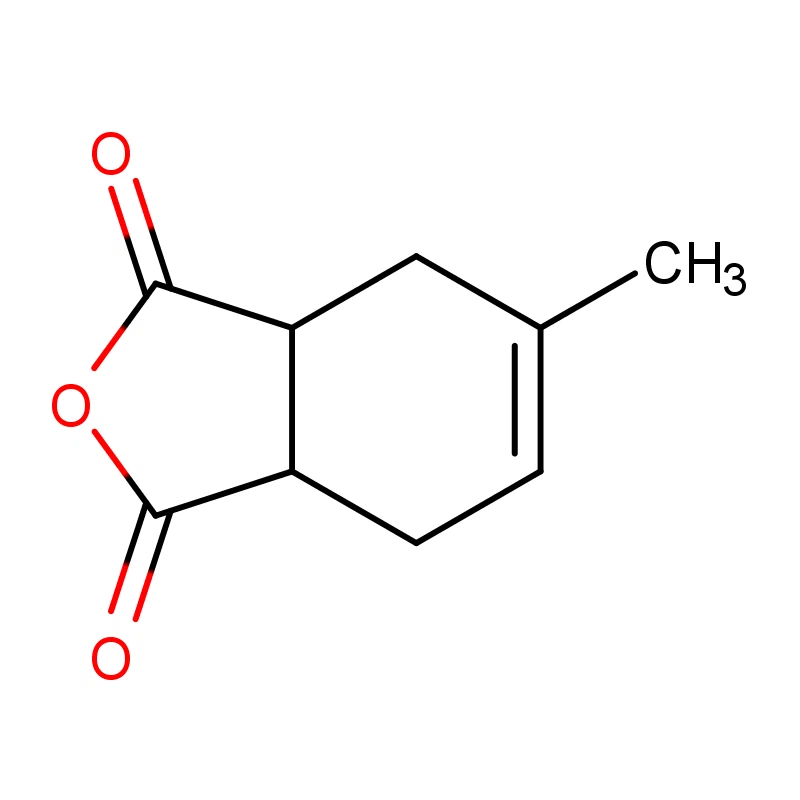
4 - MHHPA has a chemical formula of (C_9H_{12}O_3). It is a derivative of HHPA, with a methyl group ((-CH_3)) substituted at the 4 - position of the hexahydrophthalic anhydride ring. This methyl substitution changes the physical and chemical properties of the anhydride to some extent. 4 - MHHPA has a lower melting point compared to HHPA in some cases, which makes it more convenient to handle in certain processing conditions. It is also used in epoxy resin systems for applications such as coatings, adhesives, and composites. The cured materials using 4 - MHHPA as a curing agent often show good flexibility and toughness.
3 - MHHPA + 4 - MHHPA
The 3 - MHHPA + 4 - MHHPA mixture is a blend of two isomers: 3 - methylhexahydrophthalic anhydride and 4 - methylhexahydrophthalic anhydride. The ratio of 3 - MHHPA to 4 - MHHPA in the mixture can vary, and this ratio can significantly affect the properties of the cured products. This mixture is commonly used as a curing agent for epoxy resins in the electronics industry. It offers a good balance of properties such as low viscosity, high reactivity, and excellent electrical insulation. The cured epoxy resins with this mixture as a curing agent can withstand high - temperature environments, which is essential for electronic components.
Chemical Reactions of Anhydride Curing Agents with Epoxy Resins
The reaction between anhydride curing agents and epoxy resins is a complex process. Generally, the reaction is initiated by a catalyst, such as tertiary amines or imidazoles. The anhydride group first reacts with a hydroxyl group (either from the epoxy resin or from the catalyst) to form a mono - ester. This mono - ester then reacts with another epoxy group to form a diester and a new hydroxyl group. This new hydroxyl group can further react with another anhydride molecule, continuing the reaction chain.
The overall reaction is an exothermic process, and the heat generated during the reaction can affect the reaction rate and the properties of the final cured product. Controlling the reaction conditions, such as temperature, catalyst concentration, and the ratio of the anhydride curing agent to the epoxy resin, is crucial to obtaining the desired properties of the cured material.
Applications of Anhydride Curing Agents Based on Their Chemical Compositions
Electrical and Electronics Industry
As mentioned earlier, anhydride - cured epoxy resins are widely used in the electrical and electronics industry. The high electrical insulation properties, low shrinkage, and good thermal stability of these materials make them suitable for encapsulating electronic components, such as integrated circuits and printed circuit boards. For example, the use of HHPA or 3 - MHHPA + 4 - MHHPA in epoxy resin systems can protect electronic components from moisture, dust, and mechanical damage.
Coatings and Paints
Anhydride curing agents are also used in the production of high - performance coatings and paints. The cross - linked polymer network formed by the reaction of anhydride curing agents and epoxy resins provides excellent chemical resistance, abrasion resistance, and adhesion. These coatings can be used in industrial applications, such as in the protection of metal structures, pipelines, and storage tanks. The choice of anhydride curing agent, such as 4 - MHHPA, can be adjusted according to the specific requirements of the coating, such as flexibility, hardness, and curing time.
Composites
In the composite materials industry, anhydride - cured epoxy resins are used as matrices for fiber - reinforced composites. The high strength - to - weight ratio and good chemical resistance of these composites make them suitable for aerospace, automotive, and marine applications. The chemical composition of the anhydride curing agent affects the interfacial bonding between the fiber and the matrix, as well as the overall mechanical properties of the composite.
Quality Control and Purity of Anhydride Curing Agents
As a supplier, ensuring the quality and purity of anhydride curing agents is of utmost importance. Impurities in the anhydride curing agents can affect the curing reaction and the properties of the final cured products. For example, the presence of water in the anhydride can cause side reactions, leading to reduced cross - linking density and poor mechanical properties.

We use advanced analytical techniques, such as gas chromatography (GC) and high - performance liquid chromatography (HPLC), to monitor the purity of our anhydride curing agents. We also conduct strict quality control tests on each batch of products to ensure that they meet the required specifications.
Conclusion
In summary, the chemical composition of anhydride curing agents plays a vital role in determining their properties and applications. Different types of anhydride curing agents, such as HHPA, 4 - MHHPA, and 3 - MHHPA + 4 - MHHPA, have unique chemical structures that lead to different physical and chemical properties. These agents are widely used in various industries, including electrical and electronics, coatings, paints, and composites.
As a professional anhydride curing agent supplier, we are committed to providing high - quality products with consistent chemical compositions. If you are interested in our anhydride curing agents or have any questions about their applications, please feel free to contact us for further discussions and potential procurement opportunities.
References
- Lee, H., & Neville, K. (1967). Handbook of Epoxy Resins. McGraw - Hill.
- May, C. A. (Ed.). (1988). Epoxy Resins: Chemistry and Technology, Second Edition. Marcel Dekker.


