

How to remove impurities from MTHPA?
Leave a message

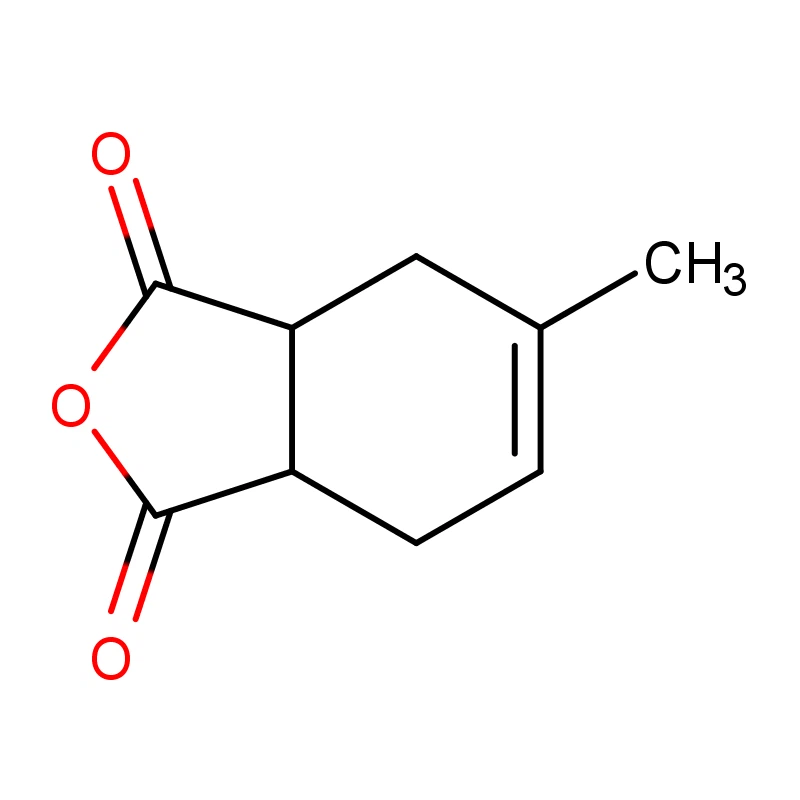
Hey there! I'm a supplier of MTHPA (Methyltetrahydrophthalic Anhydride), and today I wanna chat about how to remove impurities from MTHPA. It's a topic that's super important in our industry, and I've got some practical insights to share based on my experience.
First off, let's understand why removing impurities from MTHPA is such a big deal. MTHPA is widely used as a curing agent in epoxy resin systems, and impurities can mess with its performance. They can affect the curing process, the mechanical properties of the cured resin, and even its chemical resistance. So, getting rid of those impurities is crucial to ensure high - quality MTHPA products.
Understanding the Types of Impurities
There are different types of impurities that can be found in MTHPA. One common type is organic impurities. These can come from side - reactions during the synthesis of MTHPA. For example, some by - products might form when the raw materials react under certain conditions. Another type is inorganic impurities, like metal ions or salts. These can be introduced during the manufacturing process, perhaps from the equipment or the raw materials themselves.
Distillation: A Classic Method
One of the most widely used methods to remove impurities from MTHPA is distillation. Distillation works based on the differences in boiling points of the components in a mixture. MTHPA has a specific boiling point, and by carefully controlling the temperature and pressure during the distillation process, we can separate it from impurities with different boiling points.
There are different types of distillation techniques. Simple distillation is suitable when the difference in boiling points between MTHPA and the impurities is quite large. However, if the boiling points are closer, fractional distillation is a better choice. Fractional distillation uses a fractionating column to provide more surface area for vapor - liquid contact, which allows for more efficient separation.
When performing distillation, it's important to use high - quality equipment. The distillation column should be well - designed to ensure proper separation. Also, we need to control the heating rate and the reflux ratio carefully. The reflux ratio is the ratio of the amount of condensed vapor that is returned to the distillation column to the amount that is collected as the distillate. By adjusting the reflux ratio, we can optimize the separation efficiency.
Adsorption: A Selective Approach
Adsorption is another effective method for removing impurities from MTHPA. Adsorbents are materials that can attract and hold other molecules on their surface. There are various types of adsorbents available, such as activated carbon, silica gel, and molecular sieves.
Activated carbon is a popular adsorbent because it has a large surface area and can adsorb a wide range of organic impurities. It works by physical adsorption, where the impurities are attracted to the surface of the activated carbon due to van der Waals forces. Silica gel is also commonly used, especially for removing polar impurities. It has a high affinity for water and other polar molecules.
Molecular sieves are very selective adsorbents. They have a uniform pore size, which allows them to adsorb molecules based on their size and shape. For example, a molecular sieve with a specific pore size can adsorb small - sized impurities while allowing MTHPA molecules to pass through.

When using adsorption, we need to consider the amount of adsorbent to use and the contact time between the MTHPA and the adsorbent. Too little adsorbent won't be effective in removing all the impurities, while too much can lead to unnecessary costs. The contact time should be long enough to ensure that the impurities are fully adsorbed.
Chemical Treatment: Targeting Specific Impurities
Sometimes, distillation and adsorption alone might not be enough to remove all the impurities. In such cases, chemical treatment can be used to target specific impurities. For example, if there are acidic impurities in MTHPA, we can use a basic reagent to react with them and form salts. These salts can then be removed by filtration or other separation methods.
On the other hand, if there are reducing impurities, we can use an oxidizing agent to react with them. However, chemical treatment needs to be carefully controlled because we don't want to introduce new impurities or damage the MTHPA itself. We need to choose the right reagents and control the reaction conditions, such as temperature, pH, and reaction time.
Comparison with Related Anhydrides
It's also interesting to compare MTHPA with other related anhydrides like THPA, 3 - MHHPA+4 - MHHPA, and 4 - MHHPA. These anhydrides also have their own impurity - removal challenges.
THPA, for example, has different physical and chemical properties compared to MTHPA. The methods used to remove impurities from THPA might need to be adjusted accordingly. The boiling point of THPA is different, so the distillation conditions will be different. Also, the types of impurities in THPA might be different, which means the adsorption and chemical treatment methods might need to be customized.
3 - MHHPA+4 - MHHPA and 4 - MHHPA are also important anhydrides in the industry. When it comes to impurity removal, we need to consider their specific molecular structures and the nature of the impurities they are likely to contain. Each anhydride has its own unique characteristics, and we need to develop specific strategies for impurity removal.
Quality Control and Testing
After the impurity - removal process, it's essential to conduct quality control and testing. We can use various analytical techniques to check the purity of MTHPA. Gas chromatography (GC) is a common method to analyze the composition of MTHPA and detect the presence of impurities. It can separate the different components in MTHPA based on their interaction with a stationary phase in a column and detect them using a detector.
Infrared spectroscopy (IR) can also be used to identify the functional groups in MTHPA and check for the presence of impurities with different functional groups. By comparing the IR spectrum of the purified MTHPA with a standard spectrum, we can determine if there are any unexpected impurities.
Conclusion and Call to Action
Removing impurities from MTHPA is a multi - step process that requires a combination of different methods. Distillation, adsorption, and chemical treatment are all important techniques, and each has its own advantages and limitations. By carefully choosing the right methods and controlling the process parameters, we can produce high - quality MTHPA with low impurity levels.
If you're in the market for high - quality MTHPA, I'd love to have a chat with you. Whether you have questions about our impurity - removal process or want to discuss your specific requirements, feel free to reach out. We're committed to providing the best MTHPA products and solutions to meet your needs.
References
- Perry, R. H., & Green, D. W. (1997). Perry's Chemical Engineers' Handbook. McGraw - Hill.
- Smith, B. D. (1963). Design of Equilibrium Stage Processes. McGraw - Hill.


