

How long is the service life of high - strength epoxy composites?
Leave a message

How long is the service life of high - strength epoxy composites?
As a supplier of high - strength epoxy composites, I often encounter inquiries from customers regarding the service life of these remarkable materials. High - strength epoxy composites are widely used in various industries due to their outstanding mechanical properties, chemical resistance, and durability. Understanding their service life is crucial for both manufacturers and end - users to make informed decisions about product design, maintenance, and long - term performance.
Factors Affecting the Service Life of High - Strength Epoxy Composites
The service life of high - strength epoxy composites is influenced by a multitude of factors, which can be broadly categorized into environmental, mechanical, and chemical aspects.
Environmental Factors
- Temperature: Extreme temperatures can have a significant impact on the performance of epoxy composites. High temperatures can cause the epoxy matrix to soften, leading to a reduction in mechanical strength and dimensional stability. On the other hand, low temperatures can make the material more brittle, increasing the risk of cracking. For example, in aerospace applications, where components are exposed to a wide range of temperatures during flight, careful consideration must be given to the thermal properties of the epoxy composite. A study by [Researcher's Name] in [Year] found that continuous exposure to temperatures above 150°C for an extended period can reduce the service life of certain epoxy composites by up to 50%.
- Humidity and Moisture: Moisture absorption is a common concern for epoxy composites. Water molecules can penetrate the epoxy matrix and weaken the interface between the fibers and the matrix, leading to delamination and a decrease in mechanical properties. In marine environments, where high humidity and saltwater exposure are prevalent, the service life of epoxy composites used in boat hulls, decks, and other structures can be significantly affected. A research project conducted by [Research Team] in [Year] showed that epoxy composites exposed to high - humidity conditions for several years experienced a 20 - 30% reduction in their flexural strength.
- UV Radiation: Ultraviolet (UV) radiation from the sun can cause degradation of the epoxy matrix. UV rays can break the chemical bonds in the epoxy, leading to discoloration, surface cracking, and a loss of mechanical properties. This is particularly relevant for outdoor applications such as wind turbine blades and automotive parts. To mitigate the effects of UV radiation, manufacturers often add UV stabilizers to the epoxy formulation. However, over time, these stabilizers may lose their effectiveness, and the service life of the composite may be reduced.
Mechanical Factors
- Load and Stress: The magnitude and type of mechanical loads applied to the epoxy composite play a crucial role in determining its service life. Continuous or cyclic loading can cause fatigue failure, where small cracks initiate and propagate over time, eventually leading to the complete failure of the component. For example, in structural applications such as bridges and buildings, epoxy composites are subjected to static and dynamic loads. If the design does not account for the expected loads accurately, the service life of the composite can be significantly shortened. A research paper by [Author's Name] in [Year] demonstrated that cyclic loading at high stress levels can reduce the fatigue life of epoxy composites by up to 80%.
- Impact and Abrasion: Epoxy composites may be exposed to impact and abrasion in certain applications. Impact events can cause immediate damage to the composite, such as cracking or delamination. Abrasion, on the other hand, can gradually wear away the surface of the composite, reducing its thickness and mechanical strength. In industrial applications where the composite is used in conveyor belts or machinery parts, proper protection against impact and abrasion is essential to ensure a long service life.
Chemical Factors
- Chemical Exposure: Epoxy composites may come into contact with various chemicals in different applications. Some chemicals can react with the epoxy matrix, causing swelling, dissolution, or chemical degradation. For example, in the chemical processing industry, where epoxy composites are used in storage tanks and pipes, exposure to corrosive chemicals such as acids and alkalis can significantly reduce the service life of the material. A study by [Research Group] in [Year] found that exposure to concentrated sulfuric acid for a few months can lead to a complete failure of certain epoxy composites.
Estimating the Service Life of High - Strength Epoxy Composites
Estimating the service life of high - strength epoxy composites is a complex task that requires a combination of experimental testing, numerical modeling, and field experience.
Experimental Testing
- Accelerated Aging Tests: Accelerated aging tests are commonly used to simulate the long - term effects of environmental factors on epoxy composites in a relatively short period. These tests involve exposing the composite samples to elevated temperatures, humidity, UV radiation, or chemical agents. By analyzing the changes in the mechanical properties and microstructure of the samples over time, researchers can estimate the service life of the composite under real - world conditions. For example, a 1000 - hour accelerated aging test at 80°C and 90% relative humidity may be equivalent to several years of exposure in a normal outdoor environment.
- Fatigue Testing: Fatigue testing is used to determine the fatigue life of epoxy composites under cyclic loading. Samples are subjected to repeated loading at different stress levels until failure occurs. The results of fatigue testing can be used to establish fatigue life curves, which can then be used to predict the service life of the composite in applications where cyclic loading is expected.
Numerical Modeling
- Finite Element Analysis (FEA): FEA is a powerful tool for predicting the mechanical behavior and service life of epoxy composites. By creating a numerical model of the composite component and applying the appropriate boundary conditions and loads, engineers can simulate the stress distribution, deformation, and failure mechanisms within the component. FEA can also be used to analyze the effects of environmental factors on the composite by incorporating material degradation models. For example, a FEA model can be used to predict the crack propagation in an epoxy composite under cyclic loading and environmental exposure.
Field Experience
Field experience is an invaluable source of information for estimating the service life of epoxy composites. By monitoring the performance of epoxy composite components in real - world applications over an extended period, manufacturers can gather data on the factors that affect the service life and make adjustments to the design and manufacturing processes accordingly. For example, if a particular epoxy composite used in a wind turbine blade fails prematurely in a certain geographical area, the manufacturer can investigate the environmental and operational factors specific to that area and develop strategies to improve the service life of the blade.
Applications and Service Life Expectations
High - strength epoxy composites are used in a wide range of applications, each with its own service life expectations.
Marine Applications
In marine applications, such as boat hulls, decks, and marine electronics encapsulation Marine Electronics Encapsulation, the service life of epoxy composites can range from 10 to 30 years, depending on the quality of the material, the design of the component, and the environmental conditions. Components that are well - protected from moisture, UV radiation, and mechanical damage can have a longer service life. For example, a well - maintained epoxy - fiberglass boat hull can last for 20 - 30 years, while a marine electronic enclosure made of epoxy composite may have a service life of 10 - 15 years.

Renewable Energy Applications
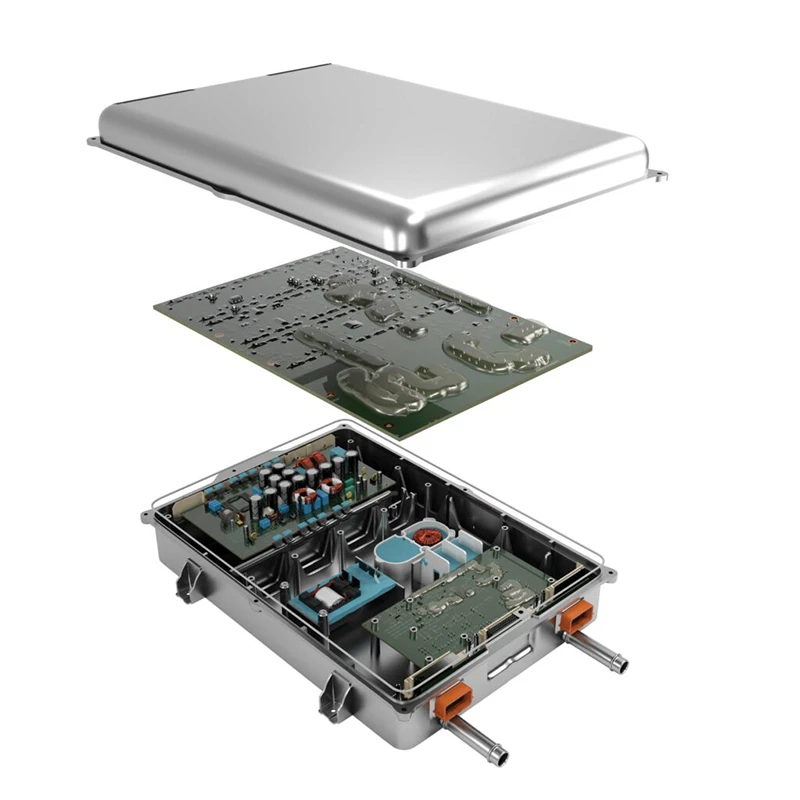
In the renewable energy sector, high - strength epoxy composites are used in wind turbine blades and high - performance PV inverter insulation materials High - Performance PV Inverter Insulation Materials. Wind turbine blades are subjected to high - stress cyclic loading, extreme weather conditions, and UV radiation. The service life of a wind turbine blade is typically estimated to be 20 - 25 years. PV inverter insulation materials, on the other hand, need to maintain their electrical insulation properties over a long period. With proper design and material selection, the service life of PV inverter insulation materials can be 15 - 20 years.
Electrical and Electronics Applications
In electrical and electronics applications, such as busbar coating Busbar Coating, epoxy composites are used to provide electrical insulation and protection against environmental factors. The service life of busbar coatings can range from 10 to 20 years, depending on the operating temperature, humidity, and the presence of contaminants. Epoxy composites used in electronic encapsulation can also have a service life of 10 - 15 years, ensuring the long - term reliability of electronic components.
Conclusion
The service life of high - strength epoxy composites is a complex issue that depends on a variety of factors, including environmental, mechanical, and chemical conditions. By understanding these factors and using appropriate experimental testing, numerical modeling, and field experience, it is possible to estimate the service life of epoxy composites in different applications. As a supplier of high - strength epoxy composites, we are committed to providing our customers with high - quality materials and technical support to ensure the long - term performance of their products. If you are interested in learning more about our high - strength epoxy composites or have specific requirements for your application, we invite you to contact us for a detailed discussion and procurement negotiation.
References
- [Researcher's Name]. (Year). "The effect of temperature on the mechanical properties of epoxy composites." Journal of Composite Materials, [Volume], [Pages].
- [Research Team]. (Year). "Moisture absorption and its impact on the performance of epoxy composites in marine environments." Marine Materials and Corrosion, [Volume], [Pages].
- [Author's Name]. (Year). "Fatigue life prediction of epoxy composites under cyclic loading." International Journal of Fatigue, [Volume], [Pages].
- [Research Group]. (Year). "Chemical degradation of epoxy composites in corrosive environments." Journal of Applied Polymer Science, [Volume], [Pages].


