

How is THPA produced?
Leave a message

Tetrahydrophthalic anhydride (THPA) is a crucial chemical compound widely used in various industries, including the production of coatings, adhesives, and plastics. As a leading THPA supplier, I am often asked about the production process of THPA. In this blog post, I will delve into the details of how THPA is produced, shedding light on the scientific and industrial aspects of its manufacturing.
Raw Materials
The production of THPA begins with the selection of appropriate raw materials. The primary raw material for THPA production is maleic anhydride, which is a white crystalline solid with a pungent odor. Maleic anhydride is a key intermediate in the chemical industry and is widely used in the production of various chemicals, including THPA.
Another important raw material is 1,3 - butadiene, a colorless gas with a faint petroleum - like odor. 1,3 - butadiene is a highly reactive compound and is used in the synthesis of THPA through a Diels - Alder reaction.
The Diels - Alder Reaction
The core step in the production of THPA is the Diels - Alder reaction. This reaction is a [2 + 4] cycloaddition reaction between a conjugated diene (1,3 - butadiene in this case) and a dienophile (maleic anhydride). The reaction is named after the German chemists Otto Diels and Kurt Alder, who discovered it in 1928 and were awarded the Nobel Prize in Chemistry in 1950 for this significant contribution.
The Diels - Alder reaction is a pericyclic reaction, which means it occurs through a cyclic transition state. In the case of THPA production, 1,3 - butadiene acts as the diene, and maleic anhydride acts as the dienophile. When these two reactants are combined under appropriate conditions, they form a cyclohexene ring structure, resulting in the formation of THPA.

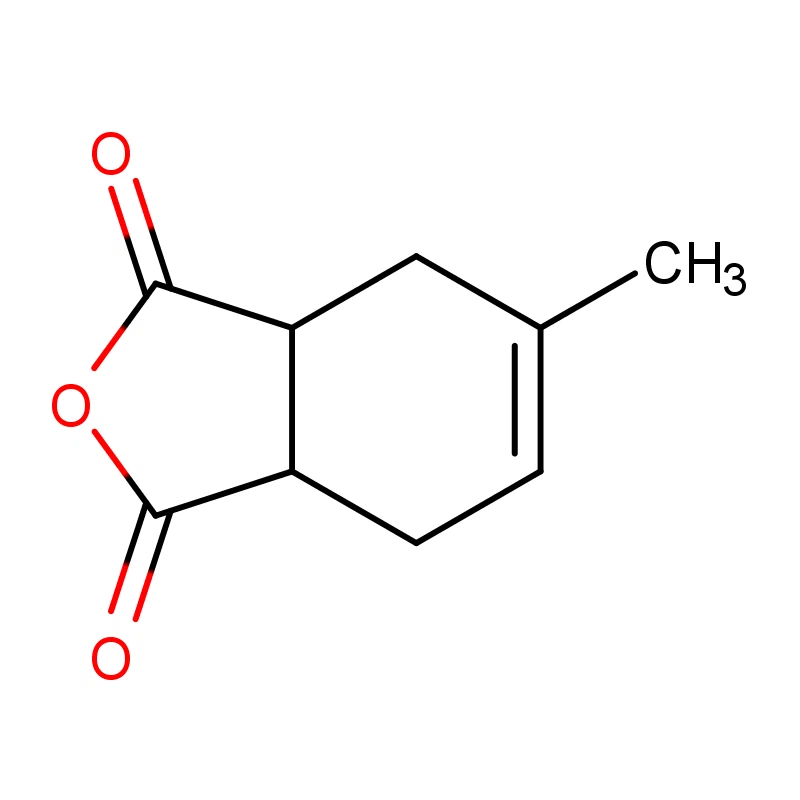
The reaction typically takes place in the liquid phase, often in the presence of a solvent. The choice of solvent is crucial as it can affect the reaction rate, selectivity, and yield. Common solvents used in this reaction include aromatic hydrocarbons such as toluene or xylene.
The reaction conditions, including temperature and pressure, also play a vital role in the Diels - Alder reaction. Generally, the reaction is carried out at elevated temperatures, usually in the range of 100 - 200 °C, and under moderate pressure. These conditions help to increase the reaction rate and ensure a high yield of THPA.
Reaction Mechanism
The Diels - Alder reaction proceeds through a concerted mechanism, which means that all bond - forming and bond - breaking processes occur simultaneously in a single step. The reaction begins with the approach of the diene and the dienophile in a specific orientation. The diene must be in the s - cis conformation for the reaction to occur effectively.
As the diene and dienophile approach each other, the π - electrons in the diene and the dienophile interact to form new σ - bonds. This leads to the formation of a six - membered cyclohexene ring. The reaction is stereospecific, which means that the stereochemistry of the reactants determines the stereochemistry of the product.
Purification and Refinement
After the Diels - Alder reaction, the crude THPA product contains impurities such as unreacted raw materials, by - products, and solvents. To obtain high - quality THPA, a purification and refinement process is necessary.
The first step in the purification process is usually distillation. Distillation is a separation technique based on the differences in boiling points of the components in the mixture. By heating the crude THPA mixture, the components with lower boiling points, such as solvents and unreacted 1,3 - butadiene, can be vaporized and separated from the THPA.
Next, the THPA may undergo further purification steps, such as crystallization or extraction. Crystallization involves cooling the THPA solution to induce the formation of pure THPA crystals, which can then be separated from the mother liquor. Extraction uses a suitable solvent to selectively dissolve the THPA and separate it from other impurities.
Quality Control
Quality control is an essential part of the THPA production process. As a THPA supplier, we adhere to strict quality standards to ensure that our products meet the requirements of our customers.
We conduct various tests on the THPA product, including chemical analysis, physical property testing, and purity determination. Chemical analysis techniques such as gas chromatography (GC) and high - performance liquid chromatography (HPLC) are used to identify and quantify the components in the THPA sample. Physical property testing includes measuring the melting point, boiling point, density, and viscosity of the THPA.
Purity determination is crucial as it directly affects the performance of THPA in its end - use applications. We use methods such as titration and spectroscopic analysis to determine the purity of our THPA products. Only products that meet our high - quality standards are released for sale.
Comparison with Related Compounds
THPA is often compared with other anhydride curing agents such as 4 - MHHPA and MTHPA. While these compounds share some similarities, they also have distinct properties and applications.
4 - MHHPA, or 4 - methylhexahydrophthalic anhydride, is a hydrogenated derivative of THPA. It has better heat resistance and weatherability compared to THPA, making it suitable for applications in high - performance coatings and electrical insulation materials.
MTHPA, or methyltetrahydrophthalic anhydride, is another important anhydride curing agent. It has a lower viscosity than THPA, which makes it easier to handle in some applications. MTHPA is commonly used in the production of epoxy resins for electrical and electronic applications.
Applications of THPA
THPA has a wide range of applications due to its unique chemical properties. One of the main applications of THPA is as a curing agent for epoxy resins. When THPA is mixed with epoxy resins, it reacts with the epoxy groups to form a cross - linked network, which gives the epoxy resin excellent mechanical properties, chemical resistance, and adhesion.
THPA is also used in the production of unsaturated polyester resins. In this application, THPA acts as a monomer, reacting with other monomers such as glycols and dicarboxylic acids to form the polyester resin. The resulting polyester resin is used in the manufacture of fiberglass - reinforced plastics, which are widely used in the automotive, marine, and construction industries.
Conclusion
In conclusion, the production of THPA is a complex process that involves the Diels - Alder reaction between maleic anhydride and 1,3 - butadiene, followed by purification and refinement steps. Quality control is essential to ensure the high - quality of the final product.
As a THPA supplier, we are committed to providing our customers with high - quality THPA products that meet their specific needs. If you are interested in purchasing THPA or have any questions about our products, please feel free to contact us for further discussion and procurement negotiation. We look forward to working with you to meet your chemical requirements.
References
- March, J. (1992). Advanced Organic Chemistry: Reactions, Mechanisms, and Structure. Wiley.
- Smith, M. B., & March, J. (2007). March's Advanced Organic Chemistry: Reactions, Mechanisms, and Structure. Wiley.
- Morrison, R. T., & Boyd, R. N. (1992). Organic Chemistry. Prentice Hall.


