

How long does it take for HHPA and epoxy resin to cure?
Leave a message

When it comes to working with HHPA (Hexahydrophthalic Anhydride) and epoxy resin, one of the most frequently asked questions is: "How long does it take for HHPA and epoxy resin to cure?" As a reliable HHPA supplier, I've encountered this query numerous times from various customers, ranging from small - scale DIY enthusiasts to large - scale industrial manufacturers. In this blog, I'll delve into the factors affecting the curing time and provide a comprehensive overview of what you can expect.
Understanding the Curing Process
Before discussing the curing time, it's essential to understand the curing process itself. When HHPA is mixed with epoxy resin, a chemical reaction occurs. HHPA acts as a curing agent, reacting with the epoxy groups in the resin. This reaction leads to the formation of a three - dimensional cross - linked polymer network, which gives the cured epoxy its strength, durability, and other desirable properties.
Factors Affecting Curing Time
Temperature
Temperature is one of the most significant factors influencing the curing time of HHPA and epoxy resin. Generally, higher temperatures accelerate the chemical reaction between HHPA and epoxy resin. At room temperature (around 20 - 25°C or 68 - 77°F), the curing process may take several hours to a few days. For example, a typical epoxy - HHPA system might start to set within 2 - 4 hours but could take up to 24 - 48 hours to reach a fully cured state.
If the temperature is increased, say to 60 - 80°C (140 - 176°F), the curing time can be significantly reduced. In some cases, the epoxy - HHPA mixture may reach a usable state within 1 - 2 hours and achieve full cure in 4 - 6 hours. However, it's important to note that extremely high temperatures can also cause problems such as uneven curing, brittleness, or even thermal degradation of the epoxy.
On the other hand, lower temperatures slow down the curing process. At temperatures below 10°C (50°F), the reaction may proceed very slowly, and it could take days or even weeks for the epoxy to fully cure. In cold environments, additional heating methods may be required to ensure proper curing.
Mixing Ratio
The ratio of HHPA to epoxy resin is another crucial factor. The correct stoichiometric ratio is necessary for a complete and efficient curing reaction. If there is too much or too little HHPA, the curing process may be affected.

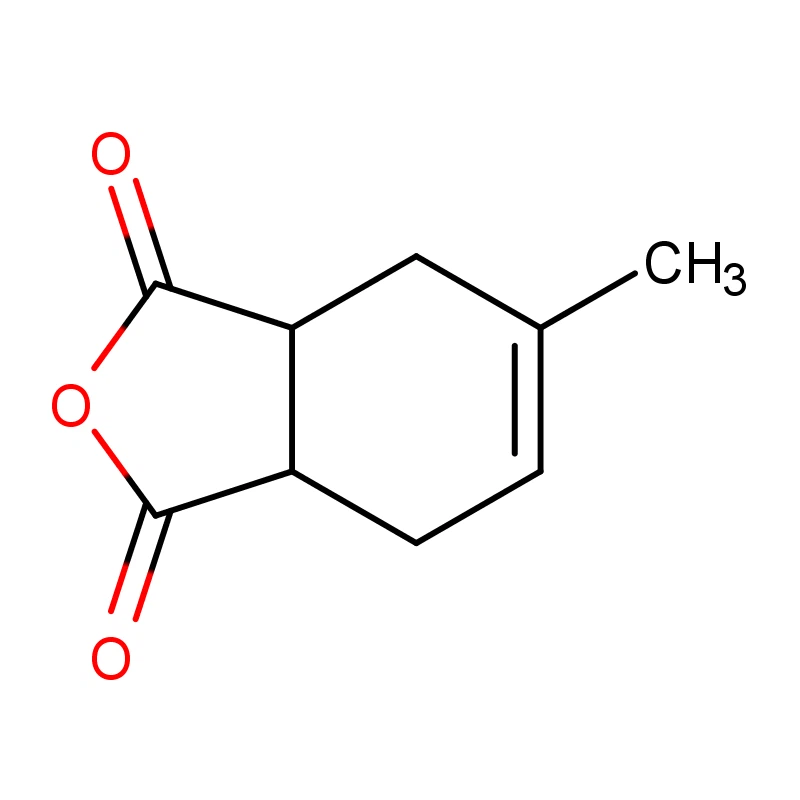
If the amount of HHPA is insufficient, the epoxy may not cure fully, resulting in a sticky or soft surface. The curing time may also be extended as the reaction cannot proceed to completion. Conversely, an excess of HHPA can lead to a faster initial curing rate, but it may also cause the cured epoxy to be more brittle and less resistant to certain environmental factors.
Epoxy Resin Type
Different types of epoxy resins have different reactivity with HHPA. Some epoxy resins are formulated to cure more quickly, while others are designed for slower, more controlled curing. For instance, bisphenol - A epoxy resins are commonly used and have a moderate reactivity with HHPA. Specialty epoxy resins, such as those with higher functionality or modified chemical structures, may have different curing characteristics.
Additives and Fillers
The addition of additives and fillers can also impact the curing time. For example, accelerators can be added to speed up the curing process. These chemicals increase the reaction rate between HHPA and epoxy resin, reducing the overall curing time. However, the use of accelerators needs to be carefully controlled, as too much can cause the mixture to cure too quickly, making it difficult to work with.
Fillers, such as silica, alumina, or carbon black, can also affect the curing time. They may absorb some of the HHPA or epoxy resin, altering the local concentration and thus the reaction rate. In general, the presence of fillers may slightly increase the curing time, especially if they are used in large quantities.
Typical Curing Times
Based on my experience as an HHPA supplier, here are some typical curing times for different scenarios:
Room Temperature Curing
- Initial Set: For a standard epoxy - HHPA mixture at room temperature (20 - 25°C), the initial set (when the mixture starts to become thick and loses its fluidity) usually occurs within 2 - 4 hours.
- Partial Cure: After 8 - 12 hours, the epoxy - HHPA system will have achieved a partial cure. It will be firm enough to handle without significant deformation but may still not have reached its full strength.
- Full Cure: A full cure at room temperature typically takes 24 - 48 hours. At this point, the epoxy will have reached its maximum strength and chemical resistance.
Elevated Temperature Curing
- Initial Set: When cured at 60 - 80°C, the initial set can occur within 30 minutes to 1 hour.
- Partial Cure: After 1 - 2 hours at elevated temperatures, the mixture will have achieved a partial cure.
- Full Cure: Full cure can be achieved within 4 - 6 hours at these temperatures.
Comparison with Other Curing Agents
HHPA is not the only curing agent available for epoxy resins. Other commonly used anhydride - based curing agents include MTHPA, 3 - MHHPA+4 - MHHPA, and 4 - MHHPA.
MTHPA generally has a faster curing rate compared to HHPA, especially at elevated temperatures. It can achieve a full cure in a shorter time, which makes it suitable for applications where rapid production is required.
3 - MHHPA+4 - MHHPA and 4 - MHHPA have their own unique curing characteristics. They may offer a balance between curing speed and the properties of the cured epoxy, such as flexibility and chemical resistance. The choice between these curing agents depends on the specific requirements of the application.
Importance of Proper Curing
Proper curing is essential for the performance of the epoxy - HHPA system. If the curing time is too short, the epoxy may not reach its full strength, resulting in a weak and brittle product. It may also be more susceptible to chemical attack, moisture penetration, and mechanical damage.
On the other hand, over - curing can also be a problem. Excessive curing time or high temperatures can cause the epoxy to become brittle, lose its flexibility, and develop internal stresses. This can lead to cracking or delamination over time.
Contact for Purchase and Consultation
If you're interested in purchasing HHPA for your epoxy resin applications or have more questions about the curing process, I'd be more than happy to assist you. Whether you're a small - scale user or a large - scale industrial manufacturer, I can provide you with high - quality HHPA and expert advice on its use. Please feel free to reach out for a consultation and discuss your specific needs.
References
- "Epoxy Resins: Chemistry and Technology" by Clayton A. May.
- "Handbook of Epoxy Resins" by Henry Lee and Kris Neville.
- Technical data sheets provided by epoxy resin and HHPA manufacturers.


